
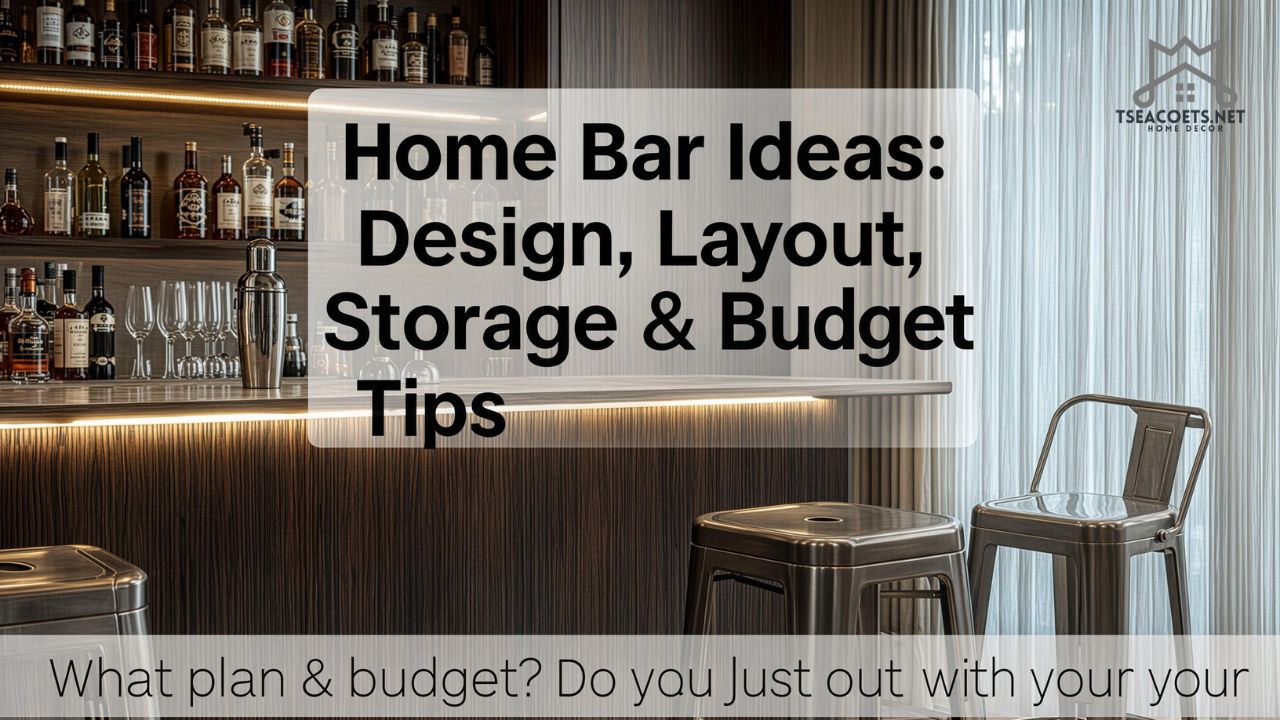
Introduction
A beautiful drink station can change the whole mood of a room. A home bar gives you a place to serve drinks, display glassware, store bottles, and make guests feel welcome without sending everyone back and forth to the kitchen.
It does not have to be huge or expensive. Some people build a full wet bar with plumbing, seating, and custom cabinets. Others use one wall, a cabinet, a cart, or a quiet corner near the dining room.
The real goal is simple: create a space that feels useful, stylish, and easy to enjoy. When planned well, it becomes more than storage. It becomes a small hosting zone where conversations start naturally.
What Is a Home Bar?
A home bar is a dedicated area inside a house for preparing, serving, and storing drinks. It may include shelves, cabinets, a countertop, a small fridge, glassware, lighting, and sometimes a sink.
In simple terms, it is your personal serving station. It can be built into a basement, living room, kitchen, dining area, lounge, patio, or even a hallway nook.
A full setup may include:
- Countertop
- Bottle storage
- Glassware shelves
- Mini fridge or wine cooler
- Ice drawer or ice bucket
- Sink, if it is a wet bar
- Seating
- Task lighting
- Decorative backsplash
Why a Home Bar Is Worth Considering
A well-designed home bar makes hosting smoother. Guests can grab a drink, sit nearby, and enjoy the space without crowding the kitchen.
It also adds personality. A simple wall with open shelves, warm LED lighting, and a few carefully arranged glasses can make a room feel finished.
Luxury home buyers have shown strong interest in wet bars, with one NAHB-referenced survey reporting that 60% of luxury buyers were interested in having one.
That does not mean every house needs a large custom bar. It simply shows that entertaining spaces are valued, especially when they are practical and attractive.
Best Places to Build a Home Bar
Basement
A basement is one of the most popular choices. It gives you privacy, space, and freedom to create a lounge-style setup.
Best for:
- Game nights
- Movie rooms
- Sports viewing
- Large gatherings
Living Room
A living room bar feels more social and visible. It works well when designed as a built-in cabinet or stylish display wall.
Dining Room
This is a smart spot because drinks, glassware, and serving items stay close to meals.
Kitchen Corner
A small dry bar near the kitchen is easy to use and usually cheaper to install.
Outdoor Patio
An outdoor version works beautifully for summer evenings, BBQs, and family events. Just use weather-resistant materials.
Wet Bar vs Dry Bar
Wet Bar
A wet bar includes a sink and usually needs plumbing. It is more useful for rinsing glasses, washing tools, and mixing drinks.
Dry Bar
A dry bar has no sink. It focuses on storage, serving, and display. Because it does not need plumbing, it can fit almost anywhere.
| Type | Best For | Pros | Cons |
|---|---|---|---|
| Wet bar | Frequent hosting | Sink, easy cleanup, premium feel | Higher cost, needs plumbing |
| Dry bar | Small homes, flexible spaces | Lower cost, easier install | No built-in water access |
| Bar cart | Apartments, renters | Portable, affordable | Limited storage |
| Built-in cabinet bar | Stylish rooms | Clean look, adds storage | May need custom work |
Layout and Space Planning
Good planning matters more than size. A small, thoughtful design can feel better than a large bar that is awkward to use.
Standard bar-height counters are commonly around 40–42 inches, while counter-height surfaces are usually around 34–36 inches.
For comfort, many designers suggest stool seating that matches the counter height and enough overhang for knees. A 12–15 inch overhang is often recommended for seated comfort.
Small Space Layout
Use:
- Floating shelves
- Narrow cabinet
- Mirror backsplash
- Slim wine fridge
- Fold-out counter
Medium Space Layout
Use:
- Base cabinets
- Open shelving
- Under-counter fridge
- Decorative lighting
- Two to three stools
Large Space Layout
Use:
- L-shaped counter
- Full back bar
- Sink
- Beverage fridge
- Display shelves
- TV or lounge seating nearby
Storage, Seating, and Lighting
Storage
Storage should be easy to reach and simple to maintain. Keep everyday glasses at eye level and heavier bottles in lower cabinets.
Smart storage ideas:
- Open shelves for display
- Closed cabinets for clutter
- Drawer dividers for tools
- Wine racks
- Glass holders
- Lazy Susan corner storage
- Mini fridge for mixers and soft drinks
Seating
Seating turns the area into a place where people stay, not just pass through.
Choose stools with:
- Correct height
- Footrest
- Comfortable seat depth
- Easy-clean fabric or leather
- Back support if people will sit for long periods
Lighting
Lighting can make or break the mood.
Use three layers:
- Task lighting under shelves
- Accent lighting behind bottles
- Pendant lighting over the counter
Warm lighting usually feels better than harsh white lighting in entertainment spaces.
Materials and Style Ideas
The materials should handle spills, moisture, stains, and regular use.
Good countertop choices include:
- Quartz
- Granite
- Butcher block with sealing
- Porcelain
- Solid surface
For backsplashes, try: - Tile
- Mirror
- Stone
- Fluted wood
- Painted paneling
- Metal accents
Modern Style
Clean lines, matte cabinets, hidden storage, and simple lighting.
Rustic Style
Wood shelves, stone backsplash, dark metal hardware, and warm tones.
Luxury Style
Marble-look counters, glass shelves, brass details, and statement pendants.
Minimal Style
One cabinet, a few glasses, a tray, and no clutter.
Budget and Financial Planning
A home bar can be affordable or expensive depending on size, plumbing, materials, and custom work.
| Budget Level | What You Can Build |
|---|---|
| Low | Bar cart, cabinet, floating shelves |
| Medium | Dry bar with counter, storage, lighting |
| High | Wet bar with sink, fridge, custom cabinetry |
| Luxury | Full entertainment bar with seating, TV, stone, plumbing |
| A dry setup usually costs less because it avoids plumbing. A wet setup costs more but may feel more complete for frequent hosting. | |
| Financially, the best choice is the one that fits your lifestyle. If you host often, the upgrade may feel worth it every week. If you rarely entertain, a simple cabinet bar may be smarter. |
Mistakes to Avoid
Avoid these common errors:
- Building too far from the main seating area
- Forgetting power outlets
- Using poor lighting
- Choosing delicate materials
- Not planning enough storage
- Buying stools at the wrong height
- Making the counter too deep for a small room
- Displaying too many bottles and creating visual clutter
A bar should feel relaxed, not crowded. Leave breathing room.
FAQ
What is the best size for a home bar?
It depends on your space. A small cabinet bar can work in 3–5 feet of wall space, while a full built-in setup may need an entire wall or corner.
Is a wet bar better than a dry bar?
A wet bar is better for frequent use because it has a sink. A dry bar is better for flexible placement and lower cost.
Where should I place a home bar?
Place it near the area where people gather, such as the living room, dining room, basement, patio, or lounge.
Does a home bar add value?
It can add appeal, especially in homes designed for entertaining. The value depends on quality, layout, and buyer preferences.
What should every bar include?
At minimum, include storage, a counter, glasses, lighting, and space for drinks or mixers.
What countertop is best?
Quartz is a strong choice because it is durable, low-maintenance, and resistant to many stains.
Can I build one in a small apartment?
Yes. A bar cart, wall shelf, or slim cabinet can create the same feeling without construction.
How do I make it look expensive?
Use warm lighting, matching glassware, clean shelves, a simple tray, and fewer visible items.
Conclusion
A home bar does not need to be oversized or flashy to feel special. The best designs are practical, comfortable, and suited to the way you actually live.
Start with location, then decide between wet and dry, plan storage, choose durable materials, and add lighting that creates warmth. When everything works together, even a small corner can become one of the most loved spots in the house.