
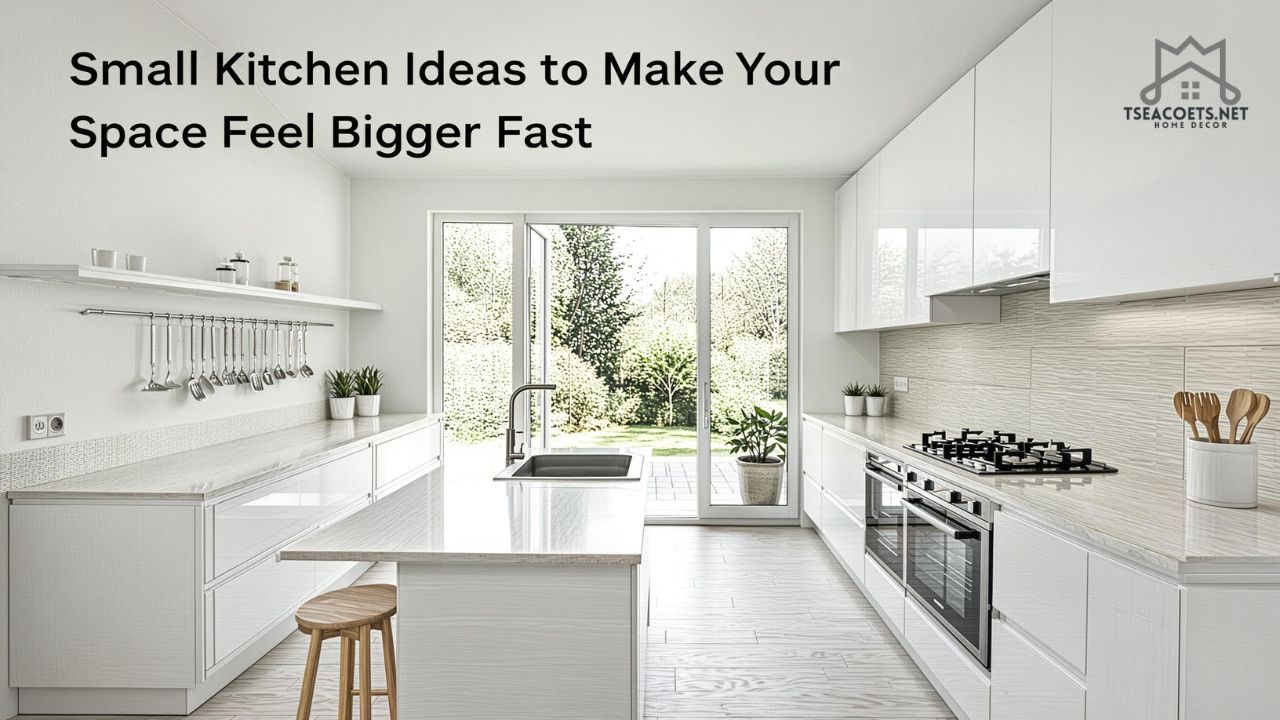
Small kitchens can feel charming, cozy, and efficient, but they can also test your patience. One crowded counter, one awkward cabinet, and suddenly cooking dinner feels like solving a puzzle. That is why small kitchen ideas matter so much. The right choices can make a tight room feel easier to use, brighter to look at, and far more enjoyable every day.
A small kitchen is not automatically a bad kitchen. In reality, some of the most beautiful kitchens are compact. They simply work harder. Every shelf has a purpose. Every inch earns its place. When design meets function, even a narrow galley or tiny apartment kitchen can feel polished and surprisingly open.
Many homeowners assume they need a full renovation to fix a cramped kitchen. That is not always true. Sometimes a better layout, smarter storage, softer lighting, and a few visual tricks make the biggest difference. A slim rolling cart, lighter cabinet color, or wall-mounted rail can change how the whole room feels.
kitchens deserve smart design
A small kitchen asks more from every decision. In a large kitchen, a poor storage choice may be annoying but manageable. In a compact kitchen, it becomes daily friction. A deep cabinet turns into a black hole. Bulky stools block movement. Oversized pendant lights make the ceiling feel lower. Good design is not just about style here. It is about comfort, speed, and sanity.
There is also a financial upside. Smaller kitchens often cost less to refresh because they need fewer materials. You may need less flooring, fewer cabinets, and a smaller amount of paint or tile. That means homeowners can sometimes afford better finishes, better lighting, or custom details without the budget climbing too high.
Another benefit is efficiency. A well-planned small kitchen can reduce wasted movement. When the sink, stove, prep space, and refrigerator sit within easy reach, cooking becomes smoother. Professional kitchens often rely on compact, high-efficiency layouts for exactly that reason.
How to plan before making changes
Before you buy organizers, paint cabinets, or tear anything out, pause and observe how the kitchen actually works. A kitchen can look cluttered for different reasons. Sometimes the issue is not lack of storage. It is poor storage. Sometimes the problem is not size. It is visual heaviness.
Measure first, shop second
Take real measurements of:
- Counter depth
- Cabinet interiors
- Wall height
- Walkway width
- Appliance width
- Door swing clearance
This step sounds basic, but it saves money and frustration. People often buy storage bins, carts, or shelves that look perfect online and then discover they block drawers or waste vertical space.
Identify your pain points
Ask yourself a few honest questions:
- Is counter clutter the biggest issue?
- Do cabinets feel too deep or too high?
- Is there enough task lighting for prep work?
- Do you need more seating, or just clearer pathways?
- Are bulky appliances taking over the room?
Write down the three biggest daily annoyances. Those usually reveal where the smartest upgrades should begin.
Separate needs from wants
A coffee station may be lovely, but not if it kills your only prep zone. Open shelves may look airy, but not if you dislike visible clutter. In a tiny kitchen, every feature has a cost. Give priority to what makes the room easier to use.
Small kitchen ideas for layout and flow
When people search for small kitchen ideas, layout is often the real problem hiding underneath the surface. If movement feels tight, the room will feel smaller no matter how pretty it is.
Keep the work triangle practical
The classic kitchen work triangle connects the sink, stove, and refrigerator. In smaller kitchens, the goal is not perfect geometry. The goal is ease. You want these three points close enough for efficiency but not so cramped that doors and bodies collide.
A practical setup might look like this:
| Kitchen Zone | Best Goal | Common Problem | Better Fix |
|---|---|---|---|
| Sink | Easy access to prep area | No landing space nearby | Add a slim drying mat or cutting board over sink |
| Stove | Safe cooking with nearby utensils | Pots stored far away | Use drawer dividers or a nearby rail |
| Fridge | Quick access without blocking flow | Door opens into walkway | Reposition furniture or use counter-depth model |
Choose one clear focal line
Busy sightlines make a small room feel chaotic. Try to create one strong visual line. That may be a clean backsplash, a row of matching cabinets, or one uninterrupted stretch of counter. When the eye can move calmly, the room feels larger.
Respect walking space
Most small kitchens work better when you avoid unnecessary furniture. A thick island in a narrow kitchen may look impressive in photos, but in real life it can turn cooking into a shoulder-brushing obstacle course. Slim pieces win. Think narrow carts, fold-down tables, or shallow shelving.
Use vertical space on purpose
Going upward is one of the most reliable small kitchen ideas because walls are often underused. Tall cabinets, ceiling-height shelves, peg rails, and stacked storage can free up lower cabinets and counters. Just keep everyday items within comfortable reach and store less-used pieces higher up.
Storage solutions that create breathing room
Storage is where a small kitchen either wins or loses. Good storage does not simply hide things. It reduces visual noise, keeps tools accessible, and prevents counters from becoming permanent dumping grounds.
Make cabinets work harder
Cabinets often waste space because of fixed shelves and awkward corners. You can improve them with:
- Pull-out baskets
- Shelf risers
- Lazy Susans
- Door-mounted racks
- Stackable containers
- Clear bins with labels
A single adjustable shelf insert can double the usable area inside a cabinet. That may sound minor, but across several cabinets the effect is huge.
Add drawer discipline
Drawers become junk zones fast. Use dividers for utensils, foil, spices, knives, and cooking tools. Deep drawers can hold pans better than lower cabinets because you can see everything at once instead of crouching and digging.
Free the counters
Some of the best small kitchen ideas are really counter-protection strategies. Keep only daily essentials out. That usually means a coffee maker, toaster if used often, and maybe a utensil crock. Everything else should earn its place.
Good counter-saving tools include:
- Magnetic knife strips
- Wall rails with hooks
- Paper towel holders under cabinets
- Mounted spice racks
- Hanging fruit baskets
- Over-the-sink cutting boards
Use open storage carefully
Open shelves can make a kitchen feel lighter, but only when they stay curated. They work best for:
- Matching dishes
- Glass jars
- Small plants
- Frequently used bowls
- Neatly folded linens
They work poorly for mismatched packaging, random gadgets, and forgotten clutter. If you are naturally tidy, they can be beautiful. If not, closed storage may create more peace.
Color, light, and materials that open up the space
Visual design shapes how large a kitchen feels. Light, reflectivity, and contrast can either open the room or close it in.
Go lighter, but not lifeless
White kitchens remain popular for a reason. They reflect light and reduce visual heaviness. Still, all-white is not the only answer. Soft greige, warm cream, pale sage, light taupe, and muted sand can create an airy feel without looking cold.
If you love darker colors, use them strategically. A moody lower cabinet with a light upper wall can still feel balanced. The trick is avoiding too much dark mass at eye level in a very tight room.
Improve lighting in layers
Poor lighting makes small kitchens feel tired and cramped. Layered lighting helps the room feel active and open. Aim for:
- Ceiling lighting for overall brightness
- Under-cabinet lighting for task work
- Accent lighting for warmth and depth
Under-cabinet lights are especially effective. They brighten the backsplash, improve visibility, and make counters feel more usable. This is one of the most overlooked small kitchen ideas, yet it changes the room immediately.
Choose reflective surfaces wisely
Glossy tile, glass cabinet inserts, polished hardware, and reflective finishes can bounce light around. That said, too much shine can feel harsh. A balance of matte and reflective textures usually feels more sophisticated.
Keep patterns controlled
In small kitchens, one statement pattern often works better than several competing ones. A patterned backsplash can add personality. So can checkerboard flooring or veined stone. But when floor, wall, backsplash, and decor all demand attention, the room starts to feel busy.
Budget-friendly upgrades with big impact
Not every kitchen improvement requires contractors or custom cabinetry. Some of the most useful upgrades are simple, affordable, and realistic for weekends.
Paint cabinets or walls
Fresh paint has outsized power in small spaces. Painting dark cabinets a lighter shade can brighten the entire room. Even painting only the walls and trim can make an older kitchen feel cleaner and more intentional.
Swap outdated hardware
New cabinet pulls and knobs are small details, but they bring cohesion. Choose hardware that matches the kitchen style:
- Brass for warmth
- Black for contrast
- Chrome or stainless for a clean modern look
- Brushed nickel for versatility
Add a slim rolling cart
A narrow rolling cart can serve as pantry space, coffee storage, or a prep station. It is one of the most practical small kitchen ideas for renters because it adds function without permanent changes.
Upgrade the backsplash
Peel-and-stick tile has improved a lot in recent years. In the right design, it can provide a fresh, polished look at a fraction of the cost of full tile work. Stick with simple patterns and good alignment for the best result.
Replace bulky decor with useful decor
In small kitchens, decor should ideally serve a purpose. A wooden cutting board leaning against the backsplash adds warmth and stays useful. Pretty canisters store dry goods. A rail of copper utensils looks decorative and practical at once.
Design mistakes that make a small kitchen feel smaller
Even a lovely kitchen can feel cramped if certain design choices work against the room.
Oversized fixtures
Large pendant lights, giant bar stools, chunky tables, and heavy range hoods can visually overwhelm a compact room. Scale matters. Slimmer silhouettes almost always feel better.
Too many colors
A rainbow of cabinet finishes, countertop tones, appliance colors, and decor accents makes the room feel fragmented. Keep the palette tighter. Two or three dominant tones usually create a calmer effect.
Ignoring the backsplash height
Stopping a backsplash at awkward points can chop up the wall visually. Running the tile neatly to a natural stopping point, such as the cabinet line or a full section of wall, often feels more finished.
Storing everything at eye level
When too many items sit in plain view, the room feels crowded. Clear surfaces and clean wall lines make the kitchen breathe.
Following trends without thinking about use
Open shelving, no upper cabinets, dark matte surfaces, and ultra-minimal styling can look amazing online. But in reality, they may not suit your cooking habits. The best small kitchen ideas fit your life first and trends second.
Small kitchen ideas for renters and apartments
Renters often feel stuck, but there is still a lot you can do without breaking lease rules or spending too much.
Try removable upgrades
These renter-friendly options can improve the look and function of the room:
- Peel-and-stick backsplash
- Removable wallpaper
- Battery-operated under-cabinet lights
- Contact paper for shelves
- Tension rods under sinks
- Freestanding pantry shelves
Rely on furniture-style storage
A baker’s rack, slim sideboard, or narrow utility cart can add storage where built-ins fall short. Choose pieces with open lower shelves and lighter finishes if you want the room to feel less crowded.
Create zones in studio or open-plan spaces
In open apartments, the kitchen can blur into the living space. Use a small rug, coordinated bar stools, or a consistent color palette to make the area feel intentional rather than squeezed in.
Focus on reversible organization
Clear bins, drawer trays, stackable pantry boxes, and sink caddies are small changes, but together they can transform an apartment kitchen from stressful to surprisingly functional.
Real-life layout examples that work
Sometimes broad advice feels abstract. It helps to picture real layout types and what tends to work in each one.
Galley kitchen
A galley kitchen has two parallel runs, often with limited walking space. The best moves include:
- Keeping counters mostly clear
- Using one side for prep and the other for cooking
- Adding under-cabinet lights
- Avoiding handles that stick out too far
- Using ceiling-height storage
One-wall kitchen
Common in apartments and studios, this layout puts everything on a single wall. Here, vertical storage becomes crucial. A rolling island or drop-leaf table can create prep space without permanent construction.
L-shaped small kitchen
This layout often offers decent corner potential but can waste space if the corner cabinet is awkward. Lazy Susans, pull-out corner systems, and a thoughtful sink placement help a lot.
Tiny square kitchen
A square kitchen may look balanced but feel boxed in. Keeping one wall visually lighter, such as open shelving or pale tile, can soften that closed feeling. Round accessories also help break the boxy effect.
FAQ
What color works best for a small kitchen?
Light colors usually help a small kitchen feel brighter and larger. White, cream, pale gray, soft green, and warm beige are all strong choices. That said, darker shades can still work when balanced with good lighting and lighter surrounding surfaces.
How can I make my tiny kitchen look expensive?
Focus on details that create polish. Upgrade hardware, improve lighting, keep counters uncluttered, and choose one quality-looking finish such as a clean backsplash or elegant faucet. A tidy kitchen nearly always looks more expensive than a crowded one.
Are open shelves good for small kitchens?
They can be. Open shelves can make the room feel lighter, but only if you keep them neat. If you prefer hidden storage or tend to collect visual clutter, upper cabinets may work better.
What is the best layout for a small kitchen?
There is no single best layout for every home. A galley kitchen often works well for efficiency, while an L-shaped layout can create better corner use. The best layout is the one that supports easy movement and keeps prep, cooking, and cleaning zones practical.
How do I add storage without remodeling?
Use wall rails, magnetic strips, shelf risers, over-the-door organizers, slim rolling carts, and drawer dividers. These small additions can add a surprising amount of usable storage.
Should I use an island in a small kitchen?
Only if the room truly has space for it. In many cases, a slim cart, portable island, or fold-down table works better than a fixed bulky island that blocks movement.
What kind of lighting is best in a compact kitchen?
Layered lighting works best. Combine overhead lighting with task lights under cabinets. Good task lighting makes the kitchen easier to use and makes it feel more open.
Do small kitchens hurt home value?
Not necessarily. Buyers care more about function, condition, and appearance than size alone. A clean, smart, efficient kitchen can leave a much better impression than a larger kitchen with poor design.
Conclusion
A small kitchen does not need to feel cramped, dark, or frustrating. With the right plan, it can become one of the hardest-working and best-looking rooms in the home. The secret is not stuffing more into the space. It is choosing better. Better storage. Better light. Better flow. Better scale.
The most successful small kitchens are thoughtful, not flashy. They respect the room’s limits while finding clever ways to stretch comfort and function. Start with the problems that affect you every day, then build from there. A few smart moves can make a modest kitchen feel calmer, cleaner, and far bigger than its square footage suggests.