
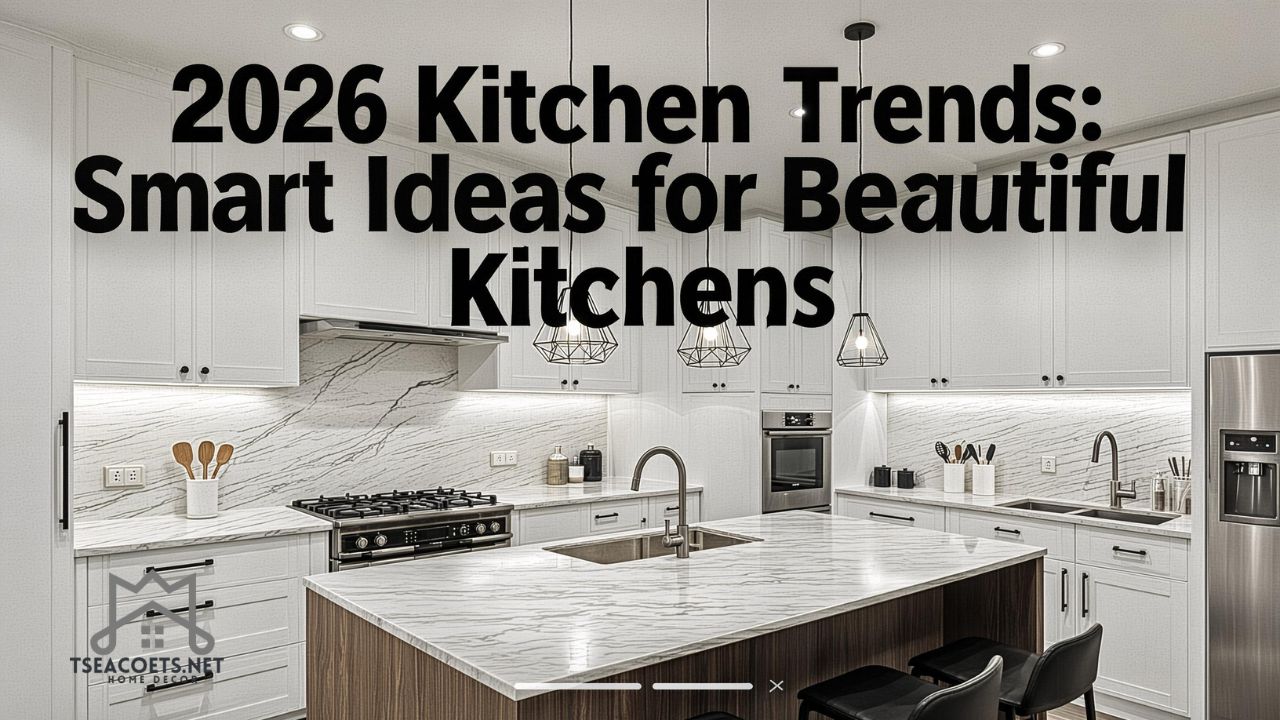
The kitchen is no longer just the place where dinner happens. It has quietly become the room where people gather after work, help kids with homework, make coffee before sunrise, and talk through everyday life. That is exactly why 2026 kitchen trends matter so much right now. People are not just chasing a pretty kitchen anymore. They want a space that feels calm, works harder, and still looks good years from now.
What stands out this year is the shift away from cold, overly polished kitchens toward spaces that feel warmer, smarter, and more personal. Fresh data from Houzz shows wood cabinets have now moved ahead of white, while storage-rich built-ins, layout changes, and aging-friendly updates are all gaining traction. At the same time, NKBA’s research keeps pointing to the same bigger themes: function first, concealed storage, wellness, natural connection, and more thoughtful use of technology.
If you are planning a full remodel, a modest update, or even just collecting ideas for later, knowing which trends have staying power can save you money and regret. Some looks will date quickly. Others will make a kitchen feel better the moment you walk in. This guide breaks down what is actually shaping kitchens now, why these choices are catching on, and how to use them in real homes without turning your space into a trend experiment.
Why 2026 kitchen trends look different this time
A few years ago, kitchen trends were often driven by what photographed well online: all-white cabinets, flat finishes, open shelves everywhere, and bold statement moments that did not always age gracefully. In reality, homeowners are making more grounded choices now. Houzz reports that 52% of renovating homeowners change the kitchen layout, but 68% keep the same footprint, which tells a very clear story: people want smarter kitchens, not always bigger ones.
That same practical mindset shows up in spending too. Houzz found the median spend for a major kitchen remodel at $55,000, with larger kitchens hitting $75,000 and smaller ones at $46,000. Even minor kitchen updates sit at a median of $20,000. When projects cost that much, homeowners naturally lean toward ideas that feel useful, durable, and emotionally satisfying rather than flashy for one season.
NKBA’s recent trend research supports that shift. Its reports and 2026 design coverage keep circling back to personalization, clutter reduction, multifunctional spaces, wellness, natural light, and sustainability. In plain language, today’s kitchen has to do more than look expensive. It has to help daily life run better.
The biggest 2026 kitchen trends to watch
Warm wood cabinets replacing the all-white look
The clearest change in 2026 kitchen trends is the rise of wood cabinetry. Houzz reports that 29% of renovating homeowners now choose wood cabinets, putting them ahead of white at 28%. Medium wood tones lead, followed by light wood, while dark wood remains a smaller but still visible choice.
That matters because cabinet color tends to set the emotional tone of the whole kitchen. White kitchens still work, especially in small or light-starved homes, but wood adds softness and depth. It feels more lived-in. Less clinical. More forgiving. A medium oak or walnut-style finish can make a new kitchen feel established on day one.
A real-world example is the homeowner who wants a modern kitchen without the coldness that sometimes comes with slab white cabinetry and gray floors. Warm wood instantly fixes that tension. Pair it with pale counters, matte hardware, and soft wall color, and the room feels both current and grounded.
Layout changes that improve daily movement
Another strong signal in 2026 kitchen trends is how many people are reworking layout before anything else. Houzz says 52% of renovating homeowners change the layout, making it the most common major upgrade. L-shaped layouts lead among changed kitchens at 35%, followed by U-shaped at 31%, with galley kitchens at 14%.
This tells you something useful: the most valuable trend is not always visible in a photo. Sometimes the best design move is moving the refrigerator, widening a walkway, or creating a better triangle between prep, cooking, and cleanup zones.
A kitchen that looks beautiful but forces two people to bump into each other every morning gets old very fast. On the other hand, a kitchen with a smoother layout feels luxurious every single day, even if the finishes are simple.
Hidden storage and clutter control
If there is one practical theme running through 2026 kitchen trends, it is this: less visual noise. NKBA’s 2025 Kitchen Trends Report specifically calls out hiding and concealing functional pieces, while Houzz data shows built-ins are everywhere. More than three-quarters of renovating homeowners add built-in features, with pantry cabinets at 47%, beverage stations at 24%, walk-in pantries at 16%, and butler’s pantries or prep kitchens at 7%.
Why is this trending so hard? Because kitchens are open to living spaces now. Nobody wants the blender, snacks, chargers, and coffee pods creating permanent visual chaos. Pocket doors, appliance garages, drawer fridges, pantry walls, and beverage centers all solve the same problem in different ways.
A family kitchen might hide school lunch supplies in one zone, coffee equipment in another, and bulk pantry items behind tall cabinet doors. That setup feels calmer and cleaner, even when life is messy.
Beverage stations and entertaining zones
This is one of the more human, lifestyle-driven parts of 2026 kitchen trends. Beverage stations are not just for luxury homes anymore. Houzz ranks them as the second most popular built-in feature at 24%.
The appeal is easy to understand. A coffee bar or drink station pulls guests, teens, or early risers away from the main cooking zone. It reduces traffic. It creates a little ritual corner in the house. And in open-plan homes, it makes entertaining feel smoother.
This does not have to mean a full wine room. It can be as simple as a tall cabinet with a pullout shelf for the coffee machine, mugs above, a mini fridge below, and a drawer for tea, sugar, and filters.
Aging-friendly and comfort-led design
Some of the smartest 2026 kitchen trends are barely visible at first glance. Houzz says 53% of renovating homeowners address current or future special needs in their projects, and when homeowners plan for aging, 90% include accessibility features. Popular choices include pullout cabinets at 59%, extra lighting at 51%, wide drawer pulls at 44%, rounded countertops at 34%, and nonslip flooring at 32%.
This is not just about retirement-age homeowners. It is about comfort. Better lighting helps everyone. Pullout storage helps everyone. Rounded edges are gentler in a busy family kitchen. Good grip hardware matters when your hands are wet, full, or tired.
The kitchen of the future is not colder and more futuristic. It is more thoughtful.
[Image placement: Detail image of pantry wall, appliance garage, and hidden beverage station.]
[Infographic placement: “Top 2026 Kitchen Trends” showing wood cabinets, layout changes, pantry storage, beverage stations, wellness lighting, and aging-friendly features.]
Materials, colors, and finishes leading the shift
Natural materials are gaining emotional value
People are tired of kitchens that feel sterile. That is why natural materials are showing up more often in the conversation around 2026 kitchen trends. Warm wood is the headline, but the deeper movement is toward texture, grain, variation, and finishes that do not feel overly manufactured.
Houzz’s backsplash data also hints at this mix of practicality and personality. In the 2025 study, 85% of homeowners upgraded backsplashes, 67% extended them to cabinets or range hoods, and 12% ran them all the way to the ceiling. Tile still dominates, but larger-format slab backsplashes and materials like porcelain, quartzite, marble, and zellige are all part of the mix.
That is why you are seeing more kitchens combine smooth cabinetry with expressive stone, handmade tile, wood grain, or brushed metal accents. The goal is not chaos. It is warmth with restraint.
Greens, earth tones, and softened neutrals
Color is changing too. Houzz notes that green edges out gray among cabinet choices after wood, white, and off-white. NKBA’s 2026 trend coverage also points to greens, blues, and browns as leading tones.
This does not mean every kitchen needs olive cabinets. What it does mean is that cooler grays are losing their grip, while earthy color stories feel more current. Think sage islands, creamy walls, mushroom-toned tile, muted blue-gray details, and brown undertones that work with wood instead of fighting it.
The best version of this trend is subtle. A soft green island in a mostly wood-and-neutral kitchen can feel timeless. Painting every cabinet a trendy color without considering light, flooring, and surrounding rooms can feel dated faster than expected.
Statement stone used more carefully
Stone is still central in 2026 kitchen trends, but people are using it in a more balanced way. Instead of stacking bold material everywhere, many kitchens now use a standout slab on the island, backsplash, or hood surround while keeping the rest of the room quieter. Houzz’s backsplash data and current designer forecasting both point toward full-height surfaces, expressive veining, and quartzite or marble looks with real character.
That balance matters. One dramatic surface can lift the whole room. Too many competing surfaces can make even an expensive kitchen feel restless.
Smart function is beating pure style
Storage is now a design feature
For years, storage was treated like the boring part of a remodel. That is not true anymore. In the newest 2026 kitchen trends, storage is part of the visual and emotional design of the room. Tall pantry cabinets, base drawers, pocket doors, drawer fridges, hidden charging zones, and pullout internals all help a kitchen stay usable without looking overstuffed. Houzz’s research and pro recommendations both show strong demand for these features.
Here is a quick way to think about it:
| Trend area | Why it is growing | Best fit |
|---|---|---|
| Pantry cabinets | Keeps dry goods and appliances out of sight | Family kitchens, open-plan homes |
| Beverage stations | Reduces traffic in the main prep area | Entertaining homes, busy mornings |
| Base drawers | Easier reach than deep lower cabinets | Universal design, compact kitchens |
| Pocket-door storage | Hides clutter without wasting space | Modern and transitional kitchens |
| Walk-in or secondary pantry zones | Creates cleaner main kitchen sightlines | Large remodels and custom builds |
Wellness is shaping kitchen choices
One of the more interesting forces behind 2026 kitchen trends is wellness. That sounds vague until you break it down. NKBA’s 2026 design coverage says wellness in the kitchen shows up through larger windows, more natural light, cleaner indoor air, better ventilation, healthier-cooking appliances, and integrated storage that reduces clutter.
That means wellness is not just a bowl of lemons on the counter. It is the decision to improve air quality with better ventilation. It is choosing layered lighting so the room feels softer at night. It is designing enough storage so surfaces stay clear and your brain feels less overloaded.
In real life, this trend is powerful because it improves how the room feels, not just how it photographs.
Technology is becoming quieter
The smartest kitchens no longer scream “smart kitchen.” NKBA research talks about being smart about smart technology, and that feels exactly right.
People still want convenience. They just want it integrated more gracefully. That could mean:
- induction cooking
- touch-free or easy-clean fixtures
- quiet appliances
- internal charging drawers
- lighting scenes for prep, dining, and late-night use
- fridge or pantry organization that cuts waste
The lesson here is simple. Choose technology that removes friction. Skip technology that adds complexity just because it sounds futuristic.
How to use 2026 kitchen trends in small kitchens
Small kitchens can benefit from 2026 kitchen trends even more than large ones because these trends are so function-led.
Choose one warm anchor
In a compact kitchen, one warm material can change everything. That might be wood lower cabinets, a wood island face, or floating wood shelves used carefully. You do not need a full timber-heavy room to get the effect.
Prioritize drawers over deep cabinets
Drawers often work better than traditional lower cabinets because they bring contents to you. That improves access and keeps small kitchens from becoming black holes of lost pots and containers. Pro storage guidance from Houzz strongly favors drawers in base cabinetry.
Run materials vertically
A backsplash that reaches to the hood or upper cabinets can make a small kitchen feel taller and more finished. Houzz found extended backsplash coverage climbing in popularity, which makes sense because it gives modest kitchens more presence without adding clutter.
Hide the countertop mess
A small appliance garage, breakfast cabinet, or slim pantry tower can do more for a small kitchen than a trendier pendant ever will. When the counters stay open, the whole room feels bigger.
Budget realities behind today’s kitchen remodels
The dream kitchen is one thing. The invoice is another. And any honest article about 2026 kitchen trends has to deal with that.
Houzz puts the median spend for major remodels at $55,000 overall, with higher numbers for larger kitchens and top-end projects stretching much further. That is why many homeowners are mixing full upgrades with selective saves: partial cabinet changes, refinishing, added storage, and layout improvements inside the same footprint. Houzz reports 27% opt for partial cabinet upgrades, and among those homeowners, refinishing exteriors is still the most common approach.
A smart budget often looks like this:
- spend more on layout, cabinetry, and ventilation
- spend carefully on counters and lighting
- save on trend-heavy details that are easy to swap later
- avoid paying premium prices for features you will not use
For example, a gorgeous statement stone may be worth it if the rest of the palette stays simple. A pot filler, by contrast, may be less valuable than better drawer storage or a real pantry wall for many families.
Common mistakes to avoid
Following photos instead of routines
A kitchen that suits a photo shoot may not suit your life. If you cook daily, easy-clean surfaces and logical prep flow matter more than a dramatic but awkward layout.
Overdoing open shelving
A little open shelving can soften a kitchen. Too much of it becomes visual labor. Hidden storage is popular for a reason.
Ignoring lighting layers
Good kitchens need task lighting, ambient lighting, and softer accent lighting. Houzz says additional lighting is one of the most common accessibility upgrades, and NKBA keeps tying lighting to both function and mood.
Choosing trend color without testing it
A green or blue cabinet can be beautiful. It can also look muddy, too dark, or oddly cool depending on your flooring and daylight. Always test.
Spending on size instead of usability
Since most renovated kitchens stay about the same size, the better question is not “How do I make it bigger?” but “How do I make it work better?” Houzz data strongly supports that mindset.
FAQ Section
FAQs
What are the top 2026 kitchen trends?
The biggest 2026 kitchen trends include warm wood cabinets, hidden storage, beverage stations, smarter layouts, wellness-focused upgrades, layered lighting, and softer earthy colors. These directions are supported by Houzz homeowner data and NKBA industry research.
Are white kitchens out in 2026?
Not completely. White kitchens still have a place, especially in bright or smaller homes. But wood has now overtaken white in Houzz’s 2026 kitchen study, which suggests the market is moving toward warmer looks.
What cabinet color is best for a timeless kitchen?
Wood tones, soft off-whites, and muted painted accents tend to age better than very sharp trend colors. Medium wood is especially strong right now because it feels both current and lasting.
Are beverage stations worth adding?
For many homes, yes. They help separate drink prep from cooking traffic and can improve how the kitchen functions during busy mornings or when guests are over. Houzz ranks beverage stations among the most popular built-in features.
What makes a kitchen feel more luxurious in 2026?
In most cases, it is not one flashy item. It is the combination of warm materials, better layout, hidden storage, thoughtful lighting, quieter technology, and finishes that feel rich without trying too hard.
How can I follow 2026 kitchen trends on a budget?
Start with the changes that improve daily life first: better storage, improved lighting, selective cabinet updates, and a cleaner layout. You do not need to copy every trend to get the benefit.
Do 2026 kitchen trends work in small spaces?
Yes, especially because many of the strongest ideas are based on storage, flow, and reducing clutter. Small kitchens benefit a lot from tall pantry cabinets, drawers, vertical backsplash treatments, and hidden appliance zones.
Are smart kitchens still popular in 2026?
Yes, but the trend is moving toward quieter, more useful technology rather than obvious gadget-heavy kitchens. NKBA research emphasizes a more thoughtful approach to smart design.
Conclusion
The most interesting thing about 2026 kitchen trends is that they feel more mature than many trend cycles from the past. The focus is shifting away from kitchens that simply look impressive and toward kitchens that feel better to live in. Warm wood, better storage, healthier light, calmer layouts, and more hidden function are winning because they solve real problems.
That is probably why these ideas feel so appealing. They are not just about style. They are about relief. Relief from clutter. Relief from awkward layouts. Relief from spaces that look nice but work badly. If you are planning a kitchen update this year, that is the lens worth using. Not “What is trendy?” but “What will still feel good on an ordinary Tuesday morning?”