
Introduction
You don’t always need a pharmacy for relief. Sometimes, the most effective solutions are already sitting in your kitchen. That’s where home remedies come in—simple, natural treatments passed down through generations that still hold real value today.
In daily life, we face minor issues like headaches, colds, stomach discomfort, or skin problems. Instead of reaching for quick chemical fixes every time, many people now turn to safer, time-tested alternatives. These natural solutions are not only accessible but also gentle on the body.
The growing interest in home remedies reflects a shift toward mindful living. People want control over what they consume and apply. They want solutions that feel safe, affordable, and easy to follow without complicated routines.


Understanding Home Remedies
What Are Home Remedies?
Home remedies are natural treatments using everyday ingredients like herbs, spices, fruits, and oils. These methods rely on traditional knowledge rather than modern pharmaceuticals.
Why People Trust Them
- Easy to access
- Low cost
- Minimal side effects
- Cultural familiarity
In reality, many modern medicines have roots in these natural practices.
Benefits of Home Remedies
Natural and Gentle Healing
Unlike synthetic drugs, most home remedies work gradually. They support the body instead of forcing a reaction.
Cost-Effective Solutions
You don’t need expensive products. Basic kitchen items often do the job.
Preventive Care
Regular use can strengthen immunity and reduce the risk of illness.
Fewer Side Effects
Natural ingredients usually carry lower risk when used correctly.
Popular Home Remedies for Common Health Issues
Home Remedies for Cold and Flu
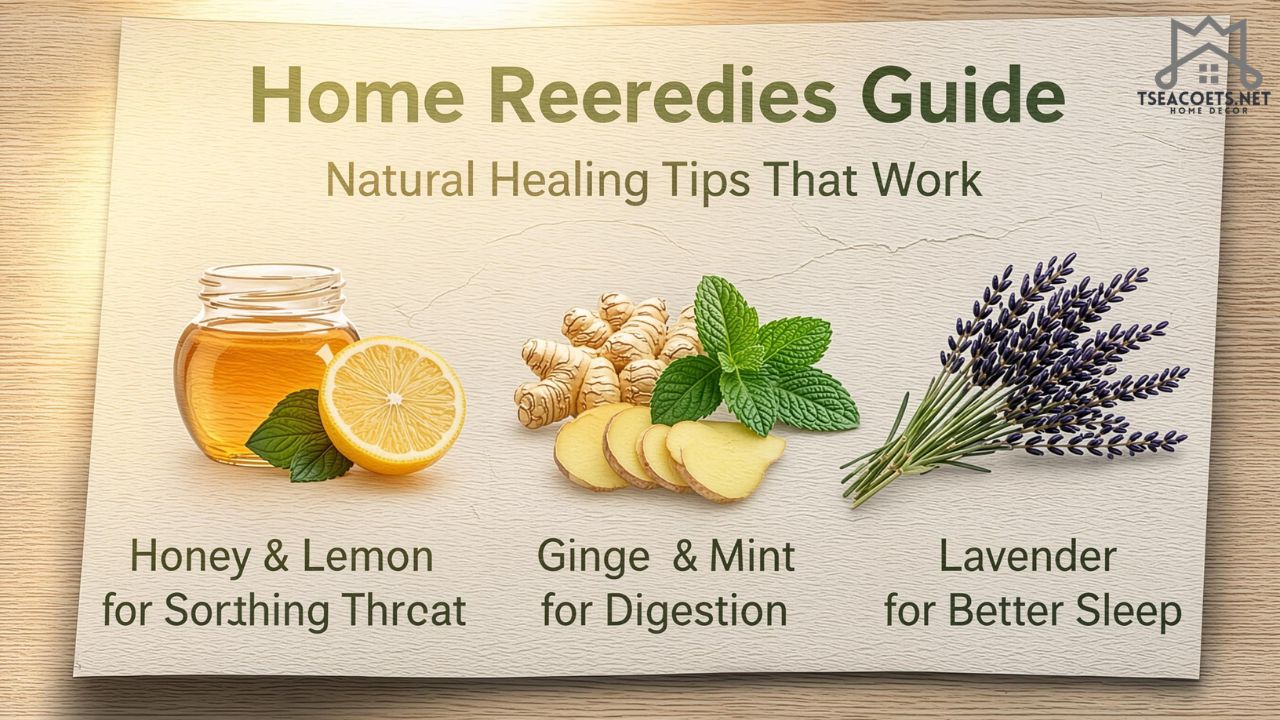
- Ginger tea with honey
- Steam inhalation
- Warm saltwater gargle
Home Remedies for Digestive Problems
- Fennel seeds after meals
- Mint tea for bloating
- Lemon water in the morning
Home Remedies for Headaches
- Peppermint oil massage
- Cold compress
- Proper hydration
Home Remedies for Sleep Issues
- Warm milk before bed
- Chamomile tea
- Reducing screen time


Herbal and Traditional Healing Systems
Ayurveda and Natural Balance
Ayurveda focuses on balancing the body’s energy using herbs and lifestyle changes.
Chinese Herbal Medicine
Uses plant-based formulas to restore internal harmony.
Western Herbal Practices
Include remedies like echinacea for immunity and valerian root for sleep.
These systems rely heavily on home remedies and holistic healing.
Home Remedies for Skin and Hair Care
Natural Skin Treatments
- Aloe vera for hydration
- Turmeric masks for glow
- Honey for acne
Hair Care Solutions
- Coconut oil for strength
- Onion juice for growth
- Egg masks for shine
These approaches reduce exposure to harsh chemicals.


Scientific Perspective on Home Remedies
Are They Effective?
Some home remedies are backed by science. For example:
- Honey has antibacterial properties
- Ginger reduces inflammation
- Turmeric contains curcumin
Where Science Is Still Catching Up
Not all remedies have strong clinical proof. Some rely on anecdotal evidence.
Combining Traditional and Modern Medicine
Many experts suggest using natural remedies alongside medical advice for best results.
Risks and Precautions
Overuse Can Be Harmful
Natural does not always mean safe. Excess use can cause issues.
Allergic Reactions
Always test before applying new remedies.
When to See a Doctor
- Persistent symptoms
- Severe pain
- Chronic conditions
Use home remedies wisely, not blindly.
Personal Background and Evolution of Natural Healing
For centuries, families relied on traditional knowledge for health care. Before modern hospitals became widespread, people treated illnesses at home using herbs and natural techniques.
Today, this knowledge is making a strong comeback. Wellness industries are now worth billions globally, with natural health products gaining massive popularity.
People are rediscovering the value of home remedies not just for treatment but for overall lifestyle improvement.
FAQs
What are the most effective home remedies?
Simple remedies like honey for cough, ginger for digestion, and turmeric for inflammation are widely trusted.
Are home remedies safe for everyone?
Most are safe, but people with allergies or medical conditions should be cautious.
Can home remedies replace medicine?
They help with minor issues, but serious conditions need professional treatment.
How long do home remedies take to work?
They usually take longer than medicine but offer gradual relief.
Are home remedies backed by science?
Some are, especially those involving known medicinal herbs.
Can children use home remedies?
Yes, but only mild and safe options under supervision.
Do home remedies expire?
Fresh ingredients should be used regularly; stored mixtures may lose effectiveness.
Are home remedies better than chemical treatments?
They are gentler but not always stronger or faster.
Conclusion
There’s something reassuring about simple solutions that work. Home remedies offer a balance between tradition and practicality, giving you control over your health in a natural way. While they may not replace modern medicine entirely, they play a powerful role in everyday wellness. Used wisely, they can make life healthier, calmer, and more connected to nature.