
Introduction
There’s something unexpectedly calming about a blue kitchen—it feels fresh, inviting, and just a little bit bold. If you’ve ever walked into a kitchen that instantly made you want to linger longer, chances are color played a big role in that feeling.
A blue kitchen isn’t just a trend—it’s a design choice that balances personality with practicality. Whether you lean toward deep navy cabinets or soft pastel tones, blue has a unique ability to adapt to almost any style, from rustic farmhouse to ultra-modern minimalism.
In reality, most people stick to safe neutrals like white or gray. But here’s the truth: those kitchens often lack character. A well-designed blue kitchen, on the other hand, stands out without being overwhelming—and that’s exactly why it’s gaining traction in modern homes.


Why Blue Kitchen Designs Are Trending
Blue kitchens are no longer niche—they’re mainstream. But not because designers randomly picked a new color. There’s logic behind it.
1. Emotional Appeal
Blue is associated with calmness and stability. In a space like a kitchen—where chaos can easily take over—this matters more than people realize.
2. Versatility Across Styles
Unlike red or green, blue adapts:
- Navy → modern and luxurious
- Sky blue → airy and coastal
- Slate blue → contemporary and grounded
3. Market Demand
According to interior design surveys, kitchens with unique cabinetry colors (especially blue) tend to:
- Increase perceived home value
- Attract more buyer attention
That said, don’t assume any blue works. Poor shade selection can make your kitchen feel cold or dated.
Understanding the Psychology of Blue in Kitchens
What Makes Blue So Effective?
Blue is one of the few colors that can:
- Reduce visual stress
- Create a sense of cleanliness
- Make small kitchens feel larger
However, here’s the catch most people ignore:
Too much blue without contrast = dull and lifeless space.
Best Use Strategy
- Use blue as a dominant element (cabinets or walls)
- Balance it with:
- Wood textures
- Metallic accents
- Neutral countertops
Popular Shades for a Blue Kitchen
Not all blues are created equal. Choosing the wrong tone is where most people mess up.
Navy Blue
- Rich, bold, and timeless
- Works best with gold or brass hardware
- Ideal for larger kitchens
Sky Blue
- Light, soft, and airy
- Great for small kitchens
- Pairs well with white
Teal Blue
- A mix of blue and green
- Adds personality and vibrancy
- Works in eclectic designs
Slate Blue
- Muted and sophisticated
- Perfect for modern interiors
Comparison Table
| Shade | Best For | Style Fit | Risk Level |
|---|---|---|---|
| Navy Blue | Large kitchens | Luxury, modern | Medium |
| Sky Blue | Small spaces | Farmhouse | Low |
| Teal | Bold designs | Eclectic | High |
| Slate Blue | Balanced look | Contemporary | Low |
Blue Kitchen Design Styles
Modern Blue Kitchen
Clean lines, minimal clutter, and high contrast.
Key elements:
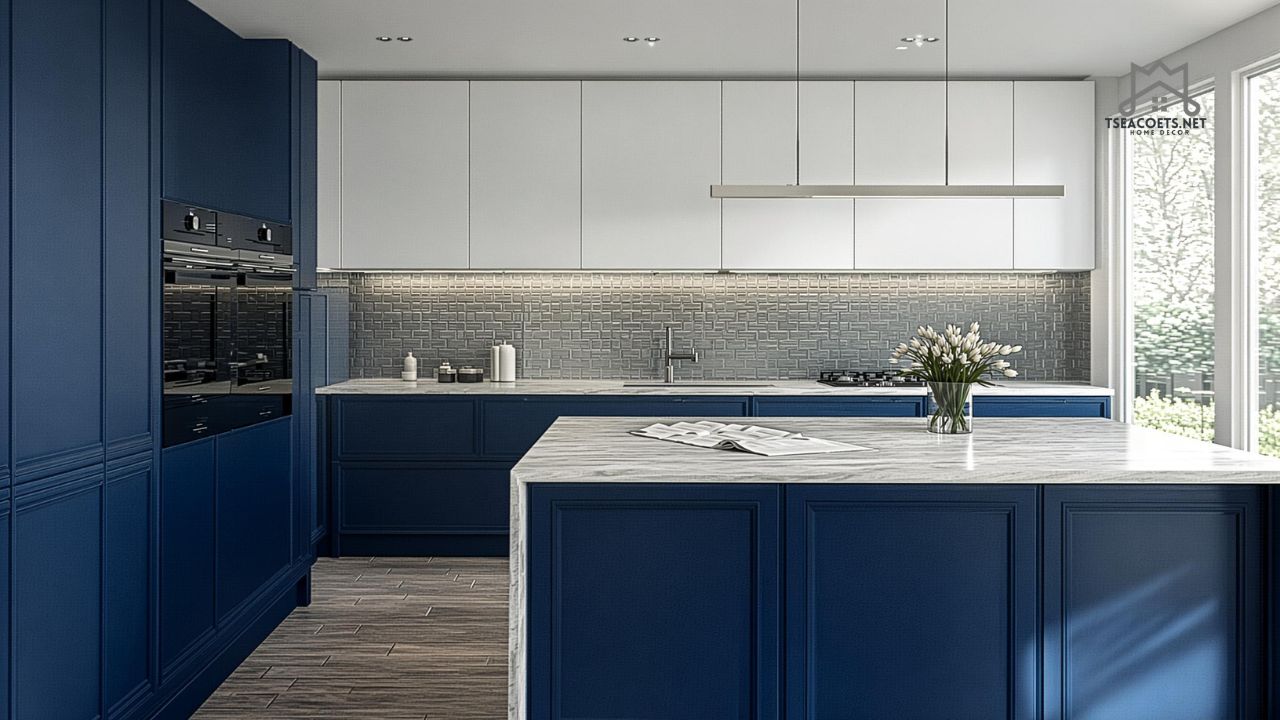
- Matte navy cabinets
- Handleless drawers
- White quartz countertops
Farmhouse Blue Kitchen
Warm, welcoming, and slightly rustic.
Features:
- Distressed blue cabinets
- Wooden countertops
- Open shelving
Coastal Blue Kitchen
Light, breezy, and relaxed.
Think:
- Soft pastel blues
- White shiplap walls
- Natural light
Industrial Blue Kitchen
Bold and edgy.
Includes:
- Dark blue cabinets
- Metal fixtures
- Concrete surfaces
Color Combinations That Work with Blue
A blue kitchen alone is not enough. Pairing matters.
Blue + White
Classic and safe. Never fails.
Blue + Gold
Luxury feel. Works best with navy.
Blue + Wood
Adds warmth. Prevents cold aesthetics.
Blue + Gray
Modern and subtle.
Blue + Black
Bold but risky. Needs balance.
Materials and Finishes for a Blue Kitchen
Cabinet Finishes
- Matte → modern
- Glossy → contemporary
- Distressed → farmhouse
Countertops
Best options:
- Quartz (low maintenance)
- Marble (luxury look, high upkeep)
- Butcher block (warm feel)
Backsplash Ideas
- White subway tiles
- Patterned ceramics
- Glass tiles for reflection


Lighting Tips for Blue Kitchens
Lighting is where most people completely fail.
Rule #1: Avoid Cold Lighting
Cool white lighting + blue = sterile environment.
Rule #2: Use Warm Lighting
- Soft yellow tones
- Pendant lights over islands
- Under-cabinet lighting
Rule #3: Layer Your Lighting
- Ambient lighting
- Task lighting
- Accent lighting
Common Mistakes to Avoid
Let’s be blunt—most blue kitchens fail because of poor execution.
1. Choosing the Wrong Shade
Too dark in a small space = cramped feeling
2. Ignoring Contrast
All-blue everything = boring
3. Overusing Trends
Trendy tiles + bold cabinets = visual overload
4. Poor Lighting
Kills the entire aesthetic
Real-Life Example: Budget vs Luxury Blue Kitchen
Budget Setup ($2,000–$5,000)
- Painted existing cabinets blue
- Laminate countertops
- Basic hardware
Mid-Range ($8,000–$15,000)
- Semi-custom cabinets
- Quartz countertops
- Upgraded lighting
Luxury ($25,000+)
- Custom cabinetry
- Marble surfaces
- Designer fixtures
Reality Check
Spending more doesn’t guarantee better design. Smart choices do.
Personal Background: Designers Behind the Blue Kitchen Trend
The rise of the blue kitchen didn’t happen randomly. It’s heavily influenced by modern interior designers and social media-driven aesthetics.
Career Influence
Interior designers have shifted from:
- Neutral-heavy designs → bold statement spaces
Achievements
- Blue kitchens featured in top design magazines
- Increased demand in renovation markets
Financial Insight
Designers specializing in high-end kitchens can charge:
- $100–$300 per hour
- $10,000+ per project
This trend is not just aesthetic—it’s a business opportunity.
Blue Kitchen Layout Planning
Best Layout Types
- L-Shaped → efficient for small spaces
- U-Shaped → maximum storage
- Island Kitchen → modern and functional
Space Optimization Tips
- Use vertical storage
- Keep workflow triangle intact
- Avoid cluttered countertops
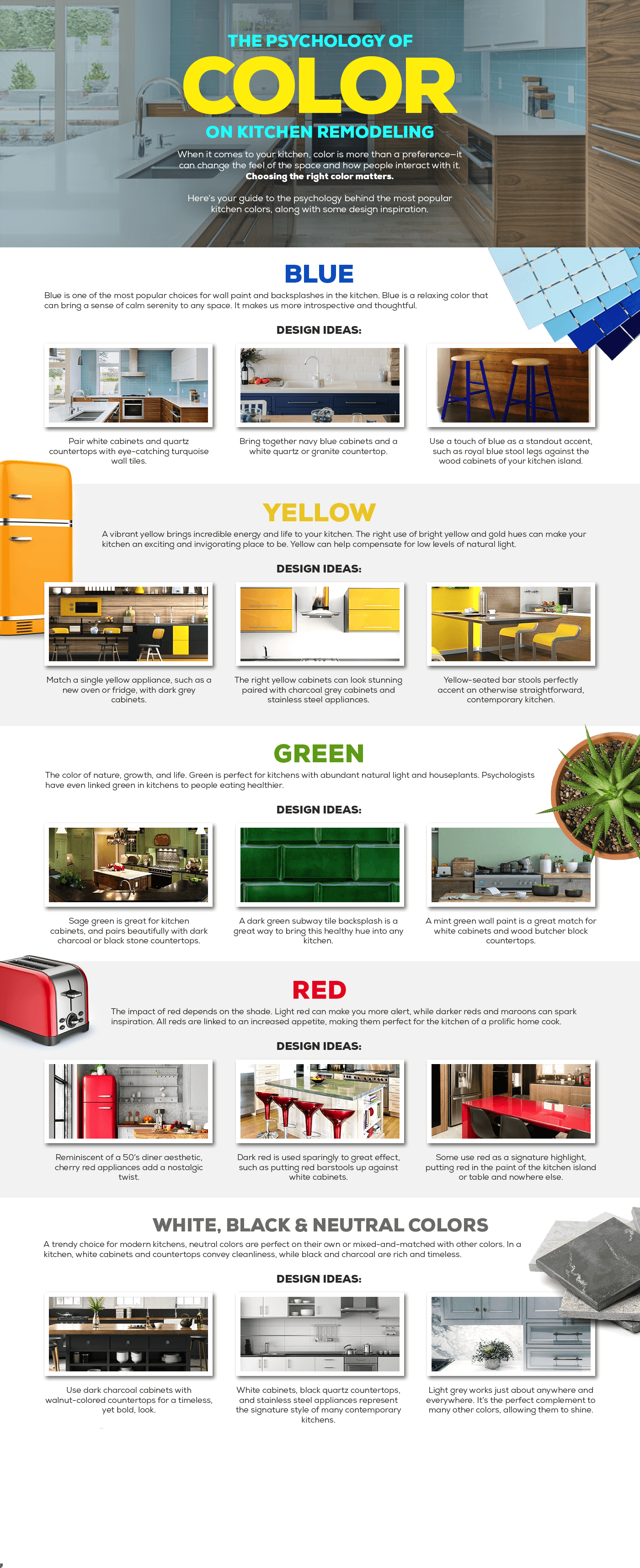
Infographic: Blue Kitchen Design Flow


FAQ
What is the best shade for a blue kitchen?
Navy blue is the most versatile, but lighter shades work better in smaller spaces.
Are blue kitchens still in style?
Yes. They’ve moved from trend to long-term design choice.
Does a blue kitchen increase home value?
It can, especially if paired with modern finishes and good lighting.
What colors go best with a blue kitchen?
White, gold, wood tones, and gray are the safest combinations.
Is a blue kitchen hard to maintain?
No more than any other color—finish matters more than color.
Can I use blue in a small kitchen?
Yes, but stick to lighter shades to avoid a cramped feel.
What countertop works best with blue cabinets?
Quartz and marble are top choices for durability and aesthetics.
Should I paint walls blue or cabinets?
Cabinets are a stronger statement; walls are safer for beginners.
Conclusion
A blue kitchen isn’t just about color—it’s about making a deliberate design choice that reflects confidence and taste. Most people play it safe and end up with forgettable spaces. If you want a kitchen that actually stands out, blue is one of the smartest moves you can make.
That said, execution is everything. The wrong shade, bad lighting, or poor combinations will ruin the entire effect. But when done right? You get a space that feels both stylish and personal—something most kitchens completely fail to achieve.
If you’re serious about upgrading your kitchen, stop chasing generic trends. Build something intentional. Blue just happens to be one of the strongest tools to do it.