
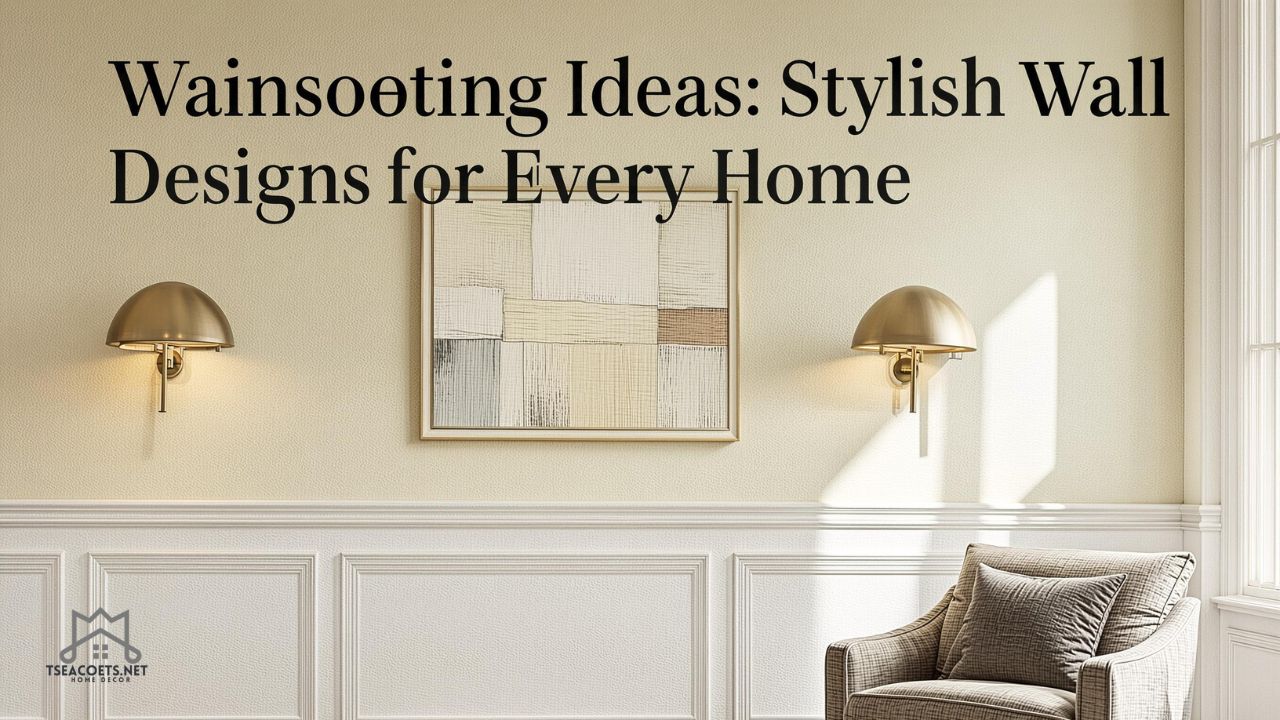
Introduction
There’s something oddly satisfying about walking into a room that just feels finished. Not cluttered. Not over-designed. Just… complete. That’s exactly where wainscoting ideas come in—they’re one of those rare design elements that instantly upgrade a space without screaming for attention.
If your walls feel flat, boring, or incomplete, you’re not alone. Most homes rely on plain drywall, which works—but it rarely impresses. Adding texture, depth, and structure through wainscoting transforms a room from average to intentional.
In reality, this isn’t just about decoration. It’s about perception. The right wall treatment can make a room look taller, wider, more expensive, or more cohesive—without changing the layout at all.
What Is Wainscoting?
Wainscoting is a decorative wall treatment that covers the lower portion of a wall using panels, molding, or boards. Traditionally, it was used for insulation and protection—but today, it’s purely aesthetic.
Think of it as structured wall design. It adds symmetry, texture, and visual weight to a space.
Common materials include:
- Wood panels
- MDF (budget-friendly option)
- PVC for moisture-prone areas
- Composite boards
The key difference between random wall decor and wainscoting? Intentionality. Every panel has alignment, spacing, and purpose.
Why Wainscoting Ideas Are Trending Again
Interior design works in cycles. Minimalism dominated for years—plain white walls, clean lines, no distractions. But people are getting tired of sterile spaces.
Now, homeowners want warmth, character, and depth.
Here’s why wainscoting ideas are back:
- Visual depth without clutter
- Affordable luxury upgrade
- Works in both modern and traditional homes
- Adds resale value
- Customizable for any budget
However, not all designs work equally well. Blindly copying Pinterest trends is where most people mess up.
Types of Wainscoting Ideas for Modern Homes
Board and Batten


This is one of the most popular wainscoting ideas right now—and for good reason.
It uses vertical boards (battens) over flat panels to create a clean grid-like pattern.
Best for:
- Modern farmhouse interiors
- Bedrooms and hallways
- Accent walls
Why it works: Vertical lines make ceilings look higher.
Raised Panel Wainscoting
This is the “luxury hotel” look.
Raised panels sit slightly above the wall surface, creating depth and shadow.
Best for:
- Formal dining rooms
- Offices
- Traditional homes
Downside: It can look outdated if paired with the wrong furniture.
Flat Panel (Shaker Style)


If you want clean and modern, this is your move.
Flat panels sit flush with the wall, creating subtle geometry without heavy detailing.
Best for:
- Minimalist homes
- Contemporary interiors
- Small rooms
Beadboard Wainscoting
This is the classic cottage or coastal look.
It features narrow vertical planks with grooves in between.
Best for:
- Bathrooms
- Kitchens
- Kids’ rooms
It adds texture without overwhelming the space.
Picture Frame Molding
This is the easiest entry-level option.
You’re basically creating rectangular frames directly on the wall using trim.
Why it’s popular:
- Cheap to install
- Highly customizable
- Works in both modern and classic spaces
Best Rooms to Use Wainscoting Ideas
Not every room needs it. Overusing wainscoting is a rookie mistake.
Here’s where it actually makes sense:
Living Room
- Creates a focal point
- Makes the space feel structured
- Works well behind sofas or TV walls
Dining Room
- Adds formality
- Enhances lighting effects
- Pairs well with chandeliers
Bedroom
- Great for accent walls behind beds
- Adds warmth without clutter
Hallways
- Protects walls from damage
- Breaks monotony
Bathroom
- Use moisture-resistant materials
- Adds a high-end spa feel
Choosing the Right Height and Style
This is where most people mess up badly.
Standard rule:
- ⅓ of wall height (safe option)
- ½ height (bold, modern look)
- Full height (feature wall)
But here’s the truth—rules aren’t universal.
Consider:
- Ceiling height
- Room size
- Furniture placement
Example:
A low ceiling + high wainscoting = cramped space.
Color Combinations That Actually Work
Color is what separates amateur design from professional execution.
Safe Combinations
- White wainscoting + neutral walls
- Grey panels + white upper wall
- Black panels + light walls
Bold Choices
- Same color top to bottom (monochrome)
- Dark green or navy panels
- Matte finishes for depth
What to Avoid
- High contrast with poor lighting
- Glossy finishes (cheap look)
- Random color matching without theme
DIY vs Professional Installation
Let’s be blunt—DIY isn’t always cheaper in the long run.
DIY Pros
- Lower upfront cost
- Full control over design
- Learning experience
DIY Cons
- Time-consuming
- Precision required
- Easy to mess up symmetry
Professional Installation
- Clean finish
- Faster execution
- Better durability
If your walls aren’t perfectly straight (most aren’t), DIY becomes tricky fast.
Cost Breakdown and Budget Planning
Here’s a realistic breakdown:
| Type | Cost per sq ft | Difficulty | Look Level |
|---|---|---|---|
| Beadboard | Low | Easy | Medium |
| Board & Batten | Medium | Medium | High |
| Flat Panel | Medium | Medium | High |
| Raised Panel | High | Hard | Luxury |
| Picture Frame Molding | Low | Easy | Medium |
Average room cost:
- DIY: $200 – $800
- Professional: $800 – $3000+
If you’re flipping homes or optimizing ROI, stick with mid-range styles.
Common Mistakes to Avoid
This is where most people sabotage their own design.
- Ignoring proportions → Panels look awkward
- Overdesigning every wall → Visual clutter
- Cheap materials → Warping and cracking
- Bad paint finish → Ruins the entire look
- Poor spacing symmetry → Instantly noticeable
Brutal truth: 80% of DIY wainscoting looks amateur because of poor planning—not execution.
FAQ
What are the most popular wainscoting ideas right now?
Board and batten, flat panel designs, and full-height paneling are dominating modern interiors due to their clean and structured look.
Is wainscoting expensive?
It depends. Simple DIY styles can cost under $300, while custom raised panels can go into thousands.
Can wainscoting work in small rooms?
Yes—but keep it simple. Use lighter colors and smaller panel designs to avoid making the space feel cramped.
What height should wainscoting be?
Typically ⅓ of the wall height, but modern designs often go up to half or even full wall.
Is wainscoting outdated?
Not at all. The style has evolved. Modern wainscoting ideas look completely different from traditional ones.
Can I install wainscoting myself?
Yes, but only if you’re comfortable with precise measurements and tools. Otherwise, expect visible imperfections.
What paint finish is best?
Eggshell or satin works best. Avoid high-gloss—it highlights flaws.
Does wainscoting increase home value?
Indirectly, yes. It improves perceived value and visual appeal, which helps in resale.
Can wainscoting be used in bathrooms?
Yes—just use moisture-resistant materials like PVC or treated MDF.
How long does installation take?
DIY: 1–3 days per room
Professional: 1–2 days
Conclusion
If your walls feel lifeless, adding structure is the fastest way to fix it—and that’s exactly what wainscoting ideas deliver.
But don’t treat this like a trend to copy blindly. The difference between a high-end interior and a failed DIY project comes down to proportion, spacing, and restraint.
Do it right, and your space looks intentional, polished, and expensive.
Do it wrong, and it screams “weekend project gone wrong.”
So choose your style carefully, plan your layout properly, and don’t cut corners where it matters.