
Introduction
There’s something undeniably appealing about a deck that feels like a natural extension of your yard rather than an elevated structure. That’s where ground level deck ideas come into play—they’re simple, accessible, and surprisingly versatile.
If you’ve ever looked at your backyard and thought, “This space has potential, but I don’t know where to start,” you’re not alone. Ground-level decks solve a very real problem: how to create a usable outdoor area without the cost, permits, and complexity of raised structures.
In reality, these decks aren’t just a budget-friendly option—they’re a design opportunity. Whether you want a cozy reading nook, an outdoor dining area, or a full-blown entertainment zone, the right approach can completely transform your space.
What Are Ground Level Decks?
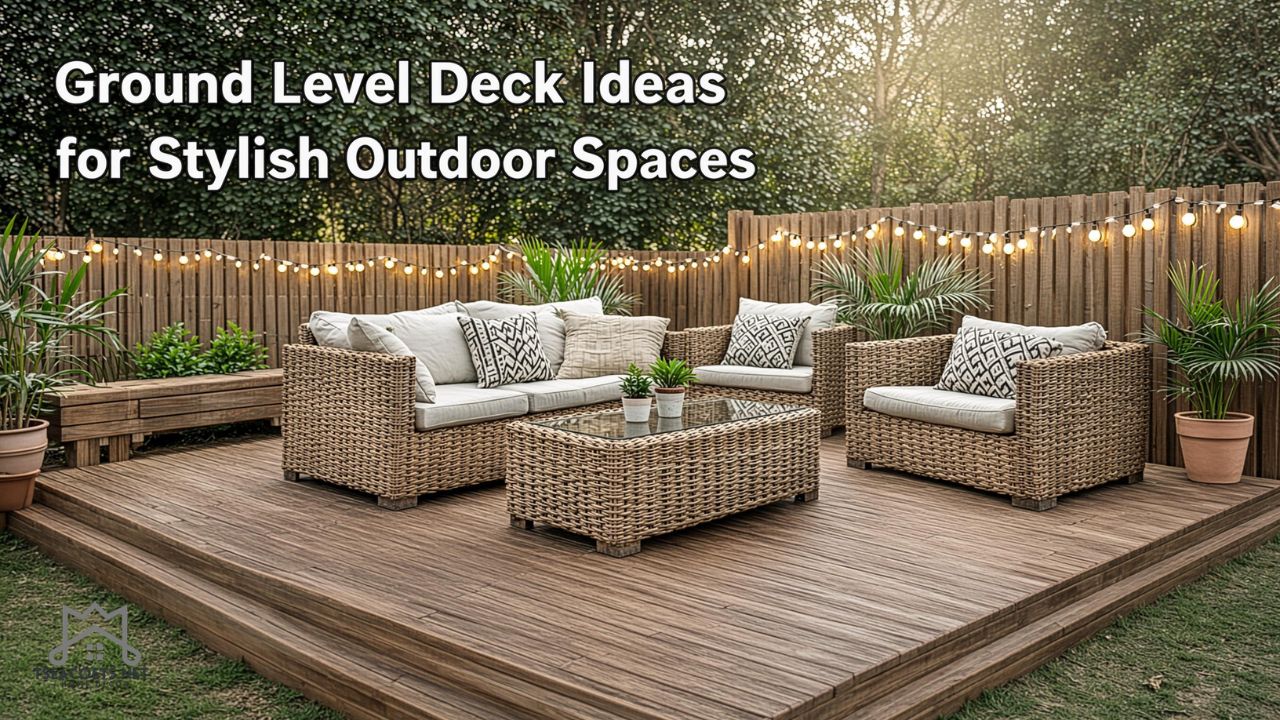
A ground-level deck—sometimes called a floating deck—is a structure built directly on or very close to the ground. Unlike raised decks, it doesn’t require railings, stairs, or complex support systems.
Key Characteristics:
- Typically less than 30 inches above ground
- No need for deep foundations
- Easier DIY installation
- Lower cost compared to elevated decks
That simplicity is exactly why ground level deck ideas have exploded in popularity. They remove friction—financial and technical—and give homeowners a faster path to a finished outdoor space.
Benefits of Ground Level Deck Ideas
Let’s be honest: most people don’t want to deal with permits, structural engineering, and weeks of construction. Ground-level decks eliminate most of that headache.
Why They Work So Well:
1. Budget-Friendly
You’re not paying for stairs, railings, or heavy structural supports.
2. Easy to Build (Even DIY)
Many homeowners complete these projects over a weekend.
3. Seamless Yard Integration
They blend naturally into landscaping instead of dominating it.
4. Flexible Design Options
From minimalist platforms to multi-zone layouts, the possibilities are wide open.
5. Low Maintenance Options Available
With composite decking, upkeep becomes almost effortless.
However, don’t confuse “easy” with “thoughtless.” Poor planning leads to drainage issues, uneven surfaces, and wasted space.
Best Ground Level Deck Ideas for Every Backyard
This is where things get interesting. Not all decks serve the same purpose, and copying Pinterest blindly is a mistake. You need to match design with function.
Minimalist Platform Deck
A simple rectangular deck with clean lines works best for modern homes.
- Neutral wood tones
- Built-in seating
- No clutter
This type of ground level deck ideas approach focuses on usability over decoration.
Multi-Zone Deck Layout
Instead of one flat space, divide your deck into sections:
- Dining area
- Lounge space
- Fire pit corner
This creates flow and makes even small decks feel larger.
Deck with Built-In Planters
Combine greenery with structure:
- Raised wooden planters
- Herb garden integration
- Privacy screening with tall plants
It’s not just aesthetic—it adds functional value.
Fire Pit Deck Design
This is one of the most popular ground level deck ideas for a reason.
- Central fire feature
- Circular seating arrangement
- Gravel or stone buffer for safety
But here’s the reality: poor fire pit placement can damage your deck or violate local safety codes.
Wraparound Ground Deck
Perfect for larger yards:
- Extends along multiple sides of the house
- Creates seamless indoor-outdoor flow
- Ideal for entertaining
This design elevates property value significantly when done right.
Small Space Ground Level Deck Ideas
Most people aren’t working with massive backyards. So let’s talk practical.
Compact Corner Deck
Use unused corners effectively:
- Triangle or square layout
- Small seating setup
- Add vertical elements like trellises
Foldable Furniture Deck
If space is tight, flexibility matters.
- Foldable chairs and tables
- Stackable seating
- Hidden storage benches
Raised Illusion Design
Even though it’s ground-level, you can create the illusion of depth:
- Use contrasting deck borders
- Add step-down gravel or stone edges
These tricks make small decks feel intentional—not cramped.
Modern and Luxury Ground Level Deck Concepts
Now, if budget isn’t your main constraint, you can push things further.
LED Lighting Integration
Lighting changes everything.
- Under-deck strip lighting
- Step-edge illumination
- Ambient perimeter lights
It adds both safety and a high-end feel.
Sunken Lounge Deck
This is a bold move.
- Lowered seating area within the deck
- Cushioned benches
- Central fire pit or table
Not easy to build—but extremely impactful.
Outdoor Kitchen Deck
This is where most people underestimate costs.
- Built-in grill
- Countertops
- Storage cabinets
It turns your deck into a full outdoor living space.
Poolside Deck Extension
If you have a pool, you’re wasting potential without a deck.
- Non-slip materials
- Lounge chairs
- Shade structures
This is one of the most functional ground level deck ideas for hot climates.
Materials to Consider for Ground Level Decks
Choosing the wrong material can ruin everything—fast.
Comparison Table
| Material | Cost Level | Durability | Maintenance | Best For |
|---|---|---|---|---|
| Pressure-Treated Wood | Low | متوسط | High | Budget projects |
| Composite Decking | High | Excellent | Low | Long-term investment |
| Cedar/Redwood | Medium | Good | Medium | Natural aesthetics |
| PVC Decking | High | Excellent | Very Low | Luxury builds |
Key Insight:
If you’re planning long-term, composite wins. Yes, it’s expensive upfront—but cheaper over time.
Cost Breakdown and Budget Planning
Let’s get real—money matters.
Average Costs:
- DIY basic deck: $500 – $2,000
- Mid-range deck: $2,000 – $6,000
- Premium design: $6,000 – $15,000+
Cost Factors:
- Material type
- Deck size
- Labor (if hired)
- Add-ons (lighting, seating, kitchen)
One mistake people make? Underestimating hidden costs like ground leveling and drainage.
Common Mistakes to Avoid
This is where most projects fail.
1. Ignoring Drainage
Water buildup = rot, mold, and structural damage.
2. Poor Ground Preparation
Uneven base leads to shifting and instability.
3. Choosing Cheap Materials
Short-term savings, long-term regret.
4. Overdesigning Small Spaces
Too many features kill usability.
5. No Clear Purpose
If you don’t define how you’ll use the deck, it becomes wasted space.
FAQ
What is the cheapest way to build a ground-level deck?
Using pressure-treated wood and a simple design is the most affordable approach. DIY installation cuts costs significantly.
Do ground-level decks require permits?
In many areas, no—but always check local building codes. Rules vary.
How long do ground-level decks last?
With proper materials and maintenance, 10–25 years depending on wood vs composite.
Can I build a ground-level deck directly on grass?
Technically yes, but not recommended. You need a stable, leveled base for durability.
What is the best material for durability?
Composite decking is the most durable and low-maintenance option.
Are ground-level decks safe for fire pits?
Yes, but you must use fire-resistant materials and proper spacing.
How do I maintain a ground-level deck?
Regular cleaning, sealing (for wood), and checking for moisture damage.
Can I install lighting on a ground-level deck?
Absolutely. LED lighting is a popular upgrade.
Conclusion
At the end of the day, ground level deck ideas aren’t just about aesthetics—they’re about practicality, usability, and smart design. The biggest mistake you can make is treating this like a purely visual project.
Think function first. How will you actually use the space? Then build around that.
A well-planned deck doesn’t just look good—it changes how you live in your home. And if you approach it strategically, it can be one of the highest ROI upgrades you’ll ever make.