Introduction
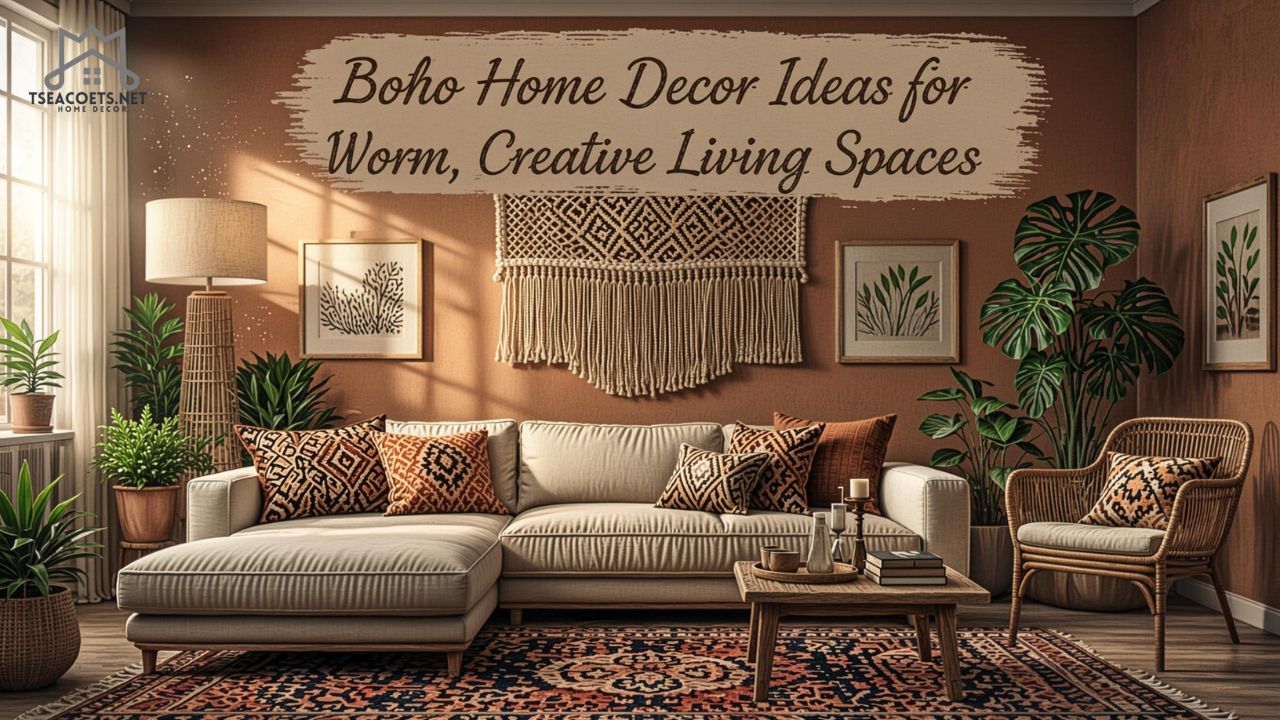
There’s a certain magic to walking into a space that feels layered, lived-in, and deeply personal. That’s the essence of boho home decor—a style that doesn’t follow rigid rules but instead celebrates creativity, comfort, and individuality.
At its core, boho design is about freedom. Freedom to mix patterns that “shouldn’t” go together, to combine old with new, and to tell your story through colors, textures, and meaningful objects. In a world full of identical interiors, this approach feels refreshingly human.
However, many people struggle with bohemian style because it can easily tip into clutter or chaos if not done thoughtfully. That’s where guidance matters. When done right, boho spaces feel intentional, warm, and surprisingly balanced.
This guide walks you through everything you need to know—from history and principles to room-by-room ideas—so you can create a bohemian space that feels authentic, not forced.

What Is Boho Home Decor?
Definition and Meaning
Boho home decor is a relaxed, eclectic interior style inspired by global cultures, artistic expression, and a free-spirited lifestyle. Instead of symmetry and uniformity, it embraces variety, imperfection, and warmth.
Unlike minimalist or contemporary interiors, boho spaces feel collected over time. They often feature layered textiles, handcrafted items, natural materials, and a mix of old and new elements.
Why Boho Style Feels So Timeless
In reality, boho design isn’t tied to trends—it’s tied to people. Because it reflects personality rather than perfection, it adapts easily across decades, cultures, and living spaces.
The Origins of Bohemian Style
From Counterculture to Mainstream
The term “bohemian” traces back to 19th-century artists and writers who rejected traditional lifestyles. They valued creativity, travel, and self-expression over material wealth and social rules.
Over time, this philosophy translated into interiors. Homes became visual diaries—filled with souvenirs, art, textiles, and objects that held meaning.
Global Influences
Boho interiors often draw inspiration from:
- Moroccan rugs and lanterns
- Indian block prints and tapestries
- African baskets and carvings
- South American woven textiles
That said, modern boho isn’t about copying cultures—it’s about appreciating craftsmanship and storytelling.

Core Elements of Boho Interiors
Layered, Lived-In Look
Boho spaces rarely feel “finished.” Instead, they evolve. You might see:
- Rugs layered over rugs
- Cushions stacked casually
- Throws draped rather than folded
This creates visual depth and emotional comfort.
Balance Between Chaos and Calm
On the other hand, successful boho design still needs restraint. Too many colors or patterns without grounding elements—like neutral walls or natural wood—can feel overwhelming.
Colors That Define Boho Spaces
Earthy and Natural Tones
Boho color palettes are rooted in nature:
- Warm whites and creams
- Terracotta and rust
- Olive and sage green
- Sand, clay, and soft browns
These shades create a calming base.
Pops of Expressive Color
That said, boho doesn’t shy away from bold accents. Jewel tones like emerald, mustard, and deep turquoise often appear in pillows, art, or rugs.
Textures and Materials That Matter
Natural Fibers as the Foundation
Texture is essential in boho home decor. Common materials include:
- Rattan and cane
- Jute and sisal
- Cotton and linen
- Raw or reclaimed wood
These materials soften spaces and add warmth without visual heaviness.
Mixing Soft and Rough
In reality, contrast is key. Pair a rough clay vase with a soft woven throw, or a sleek sofa with a shaggy rug. This tension keeps the room interesting.

Furniture Choices in Boho Design
Comfort Over Formality
Boho furniture prioritizes comfort:
- Low-profile seating
- Overstuffed sofas
- Floor cushions and poufs
Pieces often look relaxed rather than structured.
Vintage and Second-Hand Finds
That said, not everything needs to match. In fact, mismatched furniture—when unified by color or material—enhances the bohemian feel.
Boho Home Decor Room by Room
Boho Living Room Ideas
The living room is where boho style shines most:
- Layered area rugs
- Mixed throw pillows
- Statement coffee tables
- Plants in every corner
Add books, art, and personal objects to make the space feel lived-in.
Boho Bedroom Styling
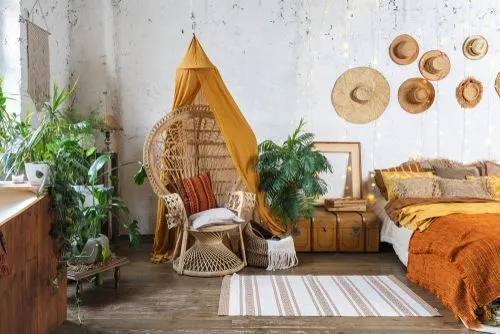
A boho bedroom should feel like a retreat:
- Soft, layered bedding
- Canopy or draped fabric
- Warm bedside lighting
- Handmade wall art
Neutral walls help keep the room restful, even with bold textiles.
Boho Kitchen and Dining Spaces
In kitchens, boho shows up subtly:
- Open shelving with ceramics
- Wooden utensils and cutting boards
- Patterned runners or rugs
In dining areas, mix chairs, textures, and lighting for a relaxed gathering space.

Mixing Modern and Bohemian Styles
The Rise of Modern Boho
Modern boho blends clean lines with eclectic touches. Think:
- Neutral walls with bold textiles
- Minimal furniture softened by texture
- Simple layouts enriched with personality
This approach works especially well in apartments and urban homes.
How to Avoid Style Clashes
However, moderation matters. Anchor the room with modern basics, then layer boho elements gradually to avoid visual overload.

Common Boho Decorating Mistakes
Overcrowding the Space
One of the biggest mistakes is adding too much too quickly. Boho doesn’t mean clutter—it means curated abundance.
Ignoring Negative Space
Empty space allows textures and colors to breathe. Without it, even beautiful decor feels chaotic.
How to Personalize Your Boho Space
Tell Your Story
The most compelling boho home decor reflects real life:
- Travel souvenirs
- Family heirlooms
- Handmade or DIY pieces
These items make your space uniquely yours.
Art Over Perfection
Choose art that moves you, not just what matches. In boho design, emotional connection matters more than coordination.

Sustainability and Ethical Decor
Why Boho Aligns With Conscious Living
Boho style naturally supports sustainability:
- Vintage and second-hand furniture
- Handmade and artisanal goods
- Natural, biodegradable materials
In reality, decorating this way reduces waste and supports craftsmanship.
Small Choices That Make a Difference
Opt for fewer, better-quality pieces. Support local artisans when possible, and repurpose items creatively.
FAQs About Boho Home Decor
What defines boho home decor?
Boho home decor is defined by layered textures, global influences, natural materials, and a relaxed, personal aesthetic.
Can boho style work in small spaces?
Yes. Focus on light colors, multifunctional furniture, and vertical decor to keep small spaces airy.
Is boho decor expensive?
Not necessarily. Thrifted items, DIY projects, and handmade accents make boho style accessible.
How do I keep boho decor from looking messy?
Use a neutral base, repeat key colors, and leave some areas intentionally minimal.
Can boho and minimalist styles work together?
Absolutely. Modern boho is essentially minimalism softened with texture and warmth.
Are plants essential in boho interiors?
While not mandatory, plants add life and enhance the natural feel of boho spaces.
What lighting works best for boho rooms?
Warm, ambient lighting like lanterns, table lamps, and string lights works best.
Conclusion
Bohemian interiors aren’t about following rules—they’re about creating spaces that feel honest, comforting, and alive. When approached thoughtfully, boho design offers warmth without chaos and creativity without excess.
Whether you embrace bold patterns or subtle textures, the beauty of boho lies in its flexibility. Start small, trust your instincts, and allow your space to grow with you. Over time, your home won’t just look bohemian—it will feel like home.